
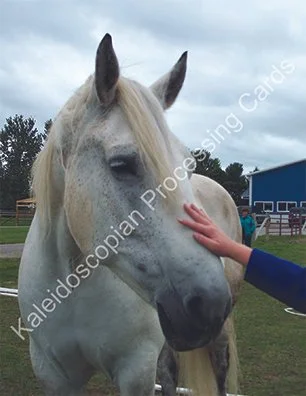
SOUL
“If you are going to have live animals, then you are going to have dead ones.”
Paul Smith, Ph.D.
I’ve always been an animal lover. Growing up I had a 10-gallon freshwater fish aquarium, a grey furry bunny (Scamper), and two parakeets, one blue one yellow and green (Frankie and Johnny). Because my parents were also dog lovers, I was blessed to live with several. The most memorable was our schnauzer (Abernathy); she was my best friend growing up. Poor girl endured being dressed up in doll clothes, pushed around in a baby carriage, and many other childhood atrocities.
At the horse farm where I took riding lessons and later worked as a groom there were lots of animals to love. My favorite cat was a multi-colored orange tabby named Pumpkin that would lay on my horse Tubby’s back. Another beloved friend was a collie named Wooooofie who loved to have her butt scratched. She’d run/waddle toward you, turning her furry sable and white butt in your direction inviting you to dig your fingers into her matted hind end.
My relationship with animals has always been soul-filling. Though the mysteries of life and death are a constant presence which cannot be ignored. In spite of this reality, to share space and energy with non-humans is almost necessary for me. The few times I’ve been without an animal companion, I boarder on depression, missing the heartfelt daily interactions.
The death of an animal is never easy (unless you are Kristi Noem – not leaving this in here, just thought you might get a chuckle) even the near-misses are challenging. Whenever your non-human animal companion is not eating, not pooping, has a snotty nose, is lethargic or otherwise uncomfortable, the responsibility you have to keep them breathing and healthy moves to the forefront of your busy life.
For me, I feel a pit in my stomach, and I can sense an aching in my heart. I experience a physical reaction when facing the possibility of living without them. The rest of the world becomes superfluous, as I am totally engaged in trying to decide the next best moves. Is the illness serious enough for the vet? Should I try anything on my own, trusting google, the advice of others, or what I already have in the medicine cabinet?
One of my most difficult losses, in part because it was so unexpected, was of my beloved Alkkhmist. Al was my first Kaleidoscope horse; I wrote about our meeting in Presence. Early one morning I went out to the barn to let horses out, finding Al lying down in his stall. I was able to get him to stand up, though not for long. At over 1,000 pounds, if he chose to go down there was not much I could do. Recognizing I needed the vet, I left his stall and quickly ran to the landline across the aisle. Next to the phone in a clear plastic sleeve was a list of emergency numbers. I called our large animal vet, Dr. Luhring.
Lynn, the red-headed animal-loving assistant, told me that Doc Luhring was on a call up in the thumb of Michigan, but she would get his partner Doctor Reuben Marrs, III to come out. Doc Marrs was primarily a cow vet, though he could treat horses too.
After several different tests and treatments, without any improvement by Al, Dr. Marrs suggested I take him to Michigan State University’s (MSU). MSU’s Veterinary Large Animal Equine Clinic is nationally known for providing the foremost in-patient care.
I was too emotional to drive, so I called Randy and asked him if he would be my chauffeur. Because of his weakened condition, it was questionable whether we’d be able to get Al on our trailer. Doctor Marrs helped me support Al as he wobbly exited his stall, then staggered up the ramp. Once we locked the slanted side bar, he was securely standing and would stay that way until we arrived at MSU’s Clinic in East Lansing an hour and ten minutes away.
The MSU physicians ran a battery of tests, unsure what was causing Al’s illness. They suggested he stay in their care until the results from some of the blood tests came back the next day. I signed the papers authorizing whatever treatment they recommended up to a certain dollar amount, then they charged my credit card for the services already provided.
Randy drove my empty trailer home while I sat next to him praying for my beloved horse. I was grateful we were able to get him to MSU and hopeful they would make him healthy again. We pulled onto my gravel driveway, arriving back at Kaleidoscope in the wee hours of the morning.
After a long, warm embracing hug Randy left to go to his home in Frankenmuth. I went through the unlocked side garage door of my house, entering the kitchen to a ringing phone. I picked up the landline to find MSU on the other end. A kind woman told me that Al had just peacefully passed; they suspected a blood disorder, but they could not confirm until tests results arrived later that day. Tears I didn’t know I had left streamed down my face. I wiped snot running from my nose on my sleeve, while listening to my options regarding Al’s body. I had to decide if I wanted his personal ashes, or a mishmash of horse ashes, or none at all.
While barely listening to the voice on the phone, I gripped the foot-long black coarse bundle of tail hair wrapped in white medical tape, stoking the memento I would make into horsehair jewelry. Fortunately, we had proactively cut a lock of Al’s tail saving me a trip back to East Lansing to retrieve this traditional horse-lover keepsake.
After hanging up the phone, I left my kitchen, joining my two dogs, Desi and Kahlua, on the back deck. I looked up into the blue cloudless starlit sky, whispered my appreciation to The Alkkhmist for sharing this life with me. I told him how much I loved and will always love him. I felt his presence, a soft blanket of energy rippled throughout my body, as I let him know I appreciated his gesture of waiting for me to get home before crossing over the rainbow bridge. Somehow it felt “right” that HE chose when to leave this earth.
Even when death is expected because older horses, similar to elder people, are more fragile and vulnerable, their passing is still difficult. Becky was owned by a Saginaw physician who rarely visited her. She was a brown, sway-backed, mare whose attitude was one of “been there done that”. At 34 years old (domestic horses typically live for 25 to 30 years) she didn’t get rattled easily and had a strong sense of self.
One day, Tam, my barn manager, finished cleaning stalls, sweeping, and filling water buckets and feed bins with the dinner grain. Her last task was to fill the outside black water tank on the side barn. As she stood holding the blue rubber hose, she noticed Becky thrashing in the pasture. The old mare rolled from one side to the other, stood up to paw, then got back down to roll again. Tam could see she was sweating. Clear signs of colic.
After calling me, Tam put the hose away, grabbed Becky’s pink halter off the stall door, clipped on a lead rope and walked into the pasture to put her in her stall.
I called Dr. Scott’s office (he bought Dr. Luhring/Marrs practice). Lynn told me Doc would be out to the farm soon. I then called Becky’s owner, Chris, to explain what was going on. Chris said she couldn’t come to the farm, though she would keep her phone handy, asking me to keep her informed.
Doc Scott confirmed that yes, Becky was colicking. He said he would hose her, trying to release any blockage. He also shared that at her age; the chances of her survival were slim.
Once he completed the hosing procedure, she did not poop and continued to show signs of distress and discomfort. Doc told us the kindest thing would be to take her out of her pain by “putting her down”.
I called Chris and she agreed. I held Becky’s head, stroking her neck and face, crying softly, thanking her for all the gifts she shared with us humans. Doc administered the shot to relax her. She gently crumpled to the sawdust covered stall floor. Doctor Scott leaned down, giving her the second shot which would stop her heart. Her head slowly moved toward the earth as she claimed her last breath.
Tam gently closed the stall door. Becky’s dead body would rest there until tomorrow when a local cow farmer with a backhoe would help move her to our unofficial burial ground at the furthest most right corner of the property.
I wiped my tears and went about the rest of my day. After dark that evening it was time to bring horses in. My horses literally put themselves away. They knew where their stalls were, so to put them to bed at night all I had to do was open the side door and each one would turn in the direction of their stall, slowly walk through their open stall door, then turn toward their corner feed bin filled with grain. Tigg to the right on the end. Next to her, Charlie on the corner. Across the aisle Mickey and Minnie shared a stall. Opposite Charlie belonged to Diva. Next to D was Becky’s stall. The other side of Becky’s stall was home to C-Red.
I opened the side door expecting each of the horses to do what they did nearly every night, walk into their respective stalls. Instead, they all turned right. The whole lot of them moved as one group rather quickly to the end of the barn where we stored hay and bedding.
What just happened, I asked myself looking at the clump of six bright-eyed horses intensely facing me? Could it be the soul lives on after the earthly body dies?
Recall a time when you’ve had a soulful experience? What happened?
Has this experience impacted other times in your life? How?
Do you have any rituals or practices which you invite yourself and others to be more soulful? What are they?